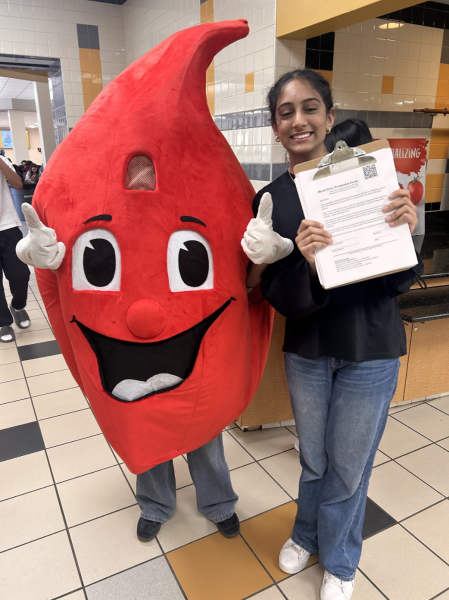
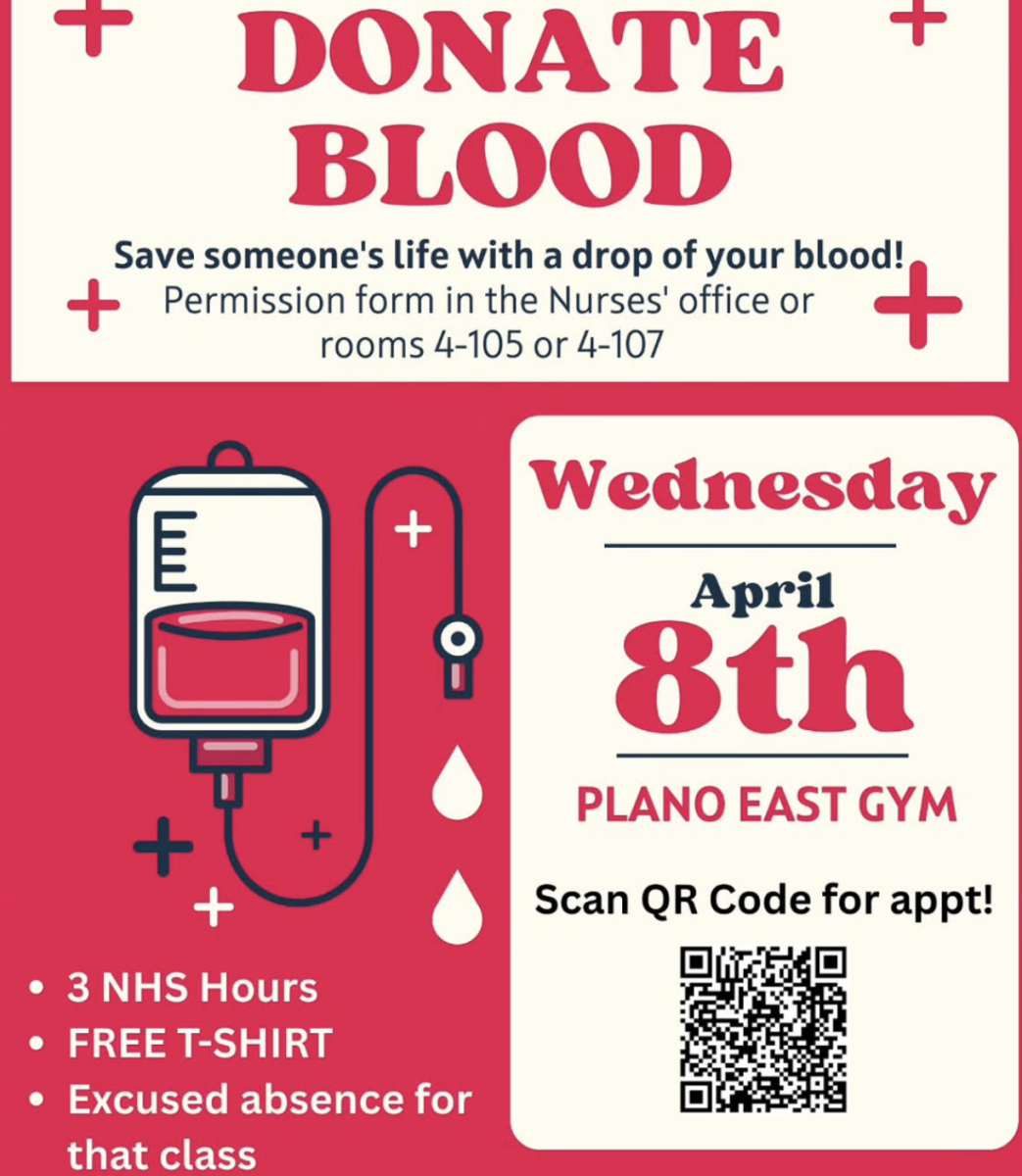
The blood drive is tomorrow from 8 a.m. to 3:15 p.m. in the gymnasium. Students who donate can save up to three lives and receive a T-shirt, snacks and three service hours.
All donors are required to sign the Carter Donor Permission Form, available in room 4-107 and the counselors’ office. According to Carter BloodCare, it is also available online under the Young Donor Program section. The district requires parental consent for the student to miss class time to donate blood and students will not be allowed to donate without it. Students who are interested must confirm what time the appointment will be held by scanning the QR code.
The minimum age to donate alone is 17-years-old, but 16-year-old students may donate if a parent is present. The blood drive will take place during the school day, so participation may cause students who are donating to miss one or more classes. Students who volunteer to donate will receive an excused absence and are expected to return to class as soon as the donation process is completed.
Students who intend to donate are encouraged to review the following information to be prepared. Students must bring either a student ID or a driver’s license as a form of identification and the Blood Drive Permission Form. It is also important for students to wear sleeves that can be easily rolled up.
Eating before donating blood is crucial to maintain stable blood sugar and blood pressure levels. This can help prevent dizziness and fainting. According to Life Share, eating a nutritious meal boosts iron levels to support hemoglobin production. This helps the body replace donated blood faster to ensure a safer, more comfortable experience.
Carter BloodCare receives fewer donations during the summer months since it is a vacation time for many. According to University Health, one in seven hospital patients could require a blood transfusion. Blood donors make transfusions possible. As a primary supplier and transfusion services for North Texas, it is crucial that enough blood is collected in case of an emergency. Each volunteer donor provides a different blood type to the patients who need it.