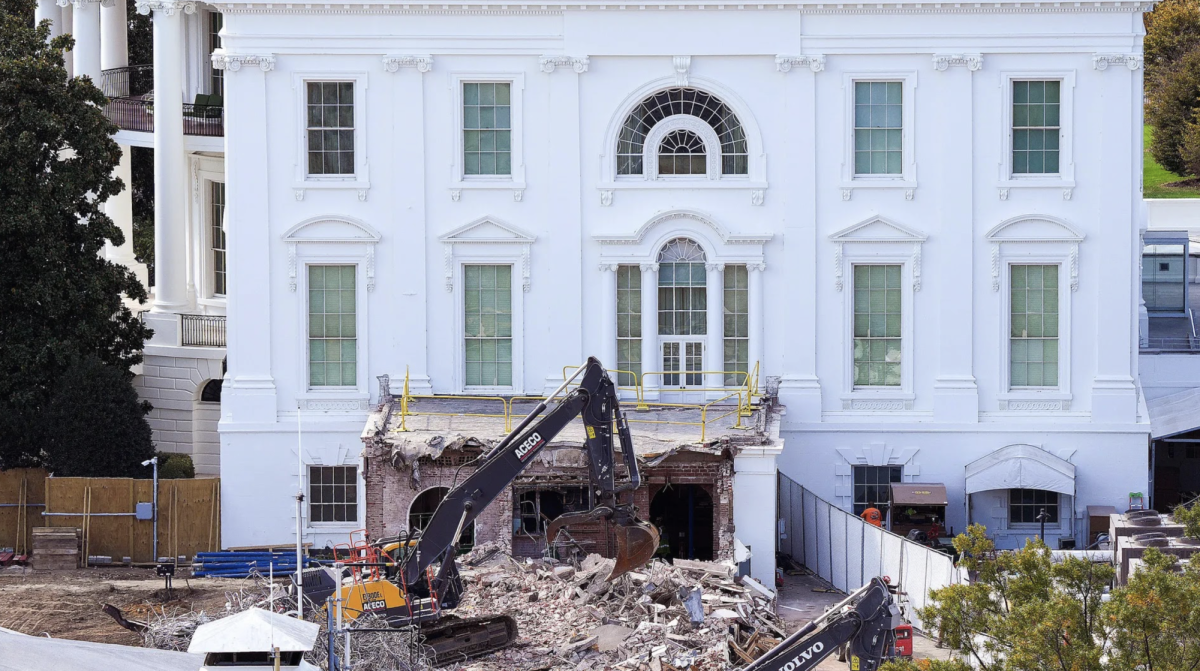
President Donald Trump’s massive ballroom project has been mired in controversy due to its high cost and ethical concerns. The White House is set to undergo its largest structural expansion in decades, as it announces plans to build a new 90,000-square-foot state ballroom to increase the venue’s capacity for official events significantly. This project is designed to find a resolution regarding limited event spaces within the White House, particularly for diplomatic gatherings.
“There have always been spaces present for these types of meetings,” junior Renad Alhaj said. “There are so many convention centers and gala halls. There are other places that can be used; there always have been. You don’t need that much space for diplomatic meetings.”
This expansion renewed public attention on the historical development of the White House. It was originally built in 1792 on a site selected by President George Washington. This ballroom has a capacity of 650 people and is larger than the previous East Room, which had a capacity of 200. Over time, the White House has undergone several changes, including major interior reconstruction during the Truman Presidency. Supporters of the project argue that the new ballroom represents another chapter of these upgrades of the White House.
“I think expansion in and of itself is not bad,” Alhaj said. “I believe it was like how JFK renovated the White House, and I think that was really good. But this is basically reconstruction. They’re tearing it down and building something new on top of it.”
This $300 million ballroom is funded by donations from wealthy companies like Amazon, Google and Meta, as well as other billionaire investors. This huge sum of money has piqued the interest of legal experts who debate over the ethics of this project. Others point out that since the project doesn’t rely on taxpayer dollars, private funding is permitted under federal guidelines. The East Wing, where the majority of the ballroom is planned to be constructed, was not added until 1902 to serve as a formal, elegant entrance for social events. However, it prompts discussions about the intent of the contributors, as these giant corporations maintain ongoing relationships with the federal government for their own personal benefit.
“The billionaires obviously benefit from this,” senior Rida Siddiqui said. “Maybe people on the left have more bias in a way that they view it negatively. If it were a liberal president, then they probably wouldn’t be as mad about it. It does feel like a waste of money, but it doesn’t directly harm anybody.”
This multi-million dollar project raises questions among students about funding priorities. Though President Donald Trump has made clear that it will be paid solely through private donations and not taxpayer money, some still wonder if these substantial resources could be redirected towards public needs, including education, school infrastructure, or national programs that affect the citizens more.
“If our government has money to rebuild the East Wing, then the budget cuts aren’t justifiable,” Siddiqui said. “I feel like the 300 million dollars could be much better utilized to the benefit of the citizens instead.”