
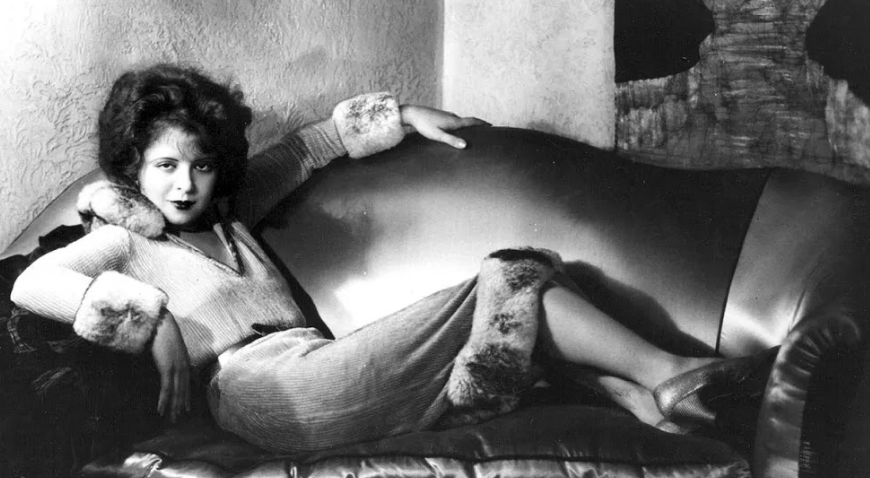
The overwhelming stage light shone in her eye, blinding Clara Bow and the line of judges facing her. Taylor Swift’s song, “Clara Bow,” explores the exploitation of female celebrities since the start of silent films in the 1920s, to the present. In her song, she mentions a century-old actor, Clara Bow.
Clara Bow was born in 1905 in Brooklyn, New York. Although she’s known as a silent-film actress of the 1920s, her humble beginnings were overshadowed by the success of her career. In her youth, Clara lived at the top of a dilapidated Church building with her mentally ill mother and absent father. Living in a tightly packed room, she was subjected to living in a rat and roach-infested tenement along with her three other siblings. Out of the three children, only Clara managed to survive well into her adulthood. Growing up in a poor household, Clara faced abuse and rape from her out-of-work father, and death threats from her schizophrenic mother. Her childhood led her to find comfort in horror films and cinema, where she often collected magazines about the film industry and Hollywood.
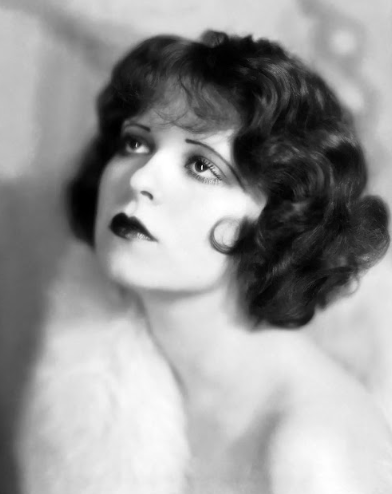
Before her stardom, Clara Bow took an acting opportunity in a magazine ad, offering a prize of a role in a motion picture. She submitted two photographs and impressed the judges with her natural ability to convey raw emotion at will. Clara was asked how she manages to cry on command; she said all she does is think about her childhood. Although she felt inferior to her wealthier peers, Clara won the beauty contest and landed a role in her first-ever film, “Beyond the Rainbow”, in 1922. During the premiere, Clara invited her friends to watch, only to be ridiculed when she realized that all her scenes had been cut from the film.
During her teen years, when Clara’s mother found out about her ambitions of becoming a Hollywood actress, Sarah Bow snapped and threatened to kill Clara. She claimed it would be better for Clara to die instead of becoming an actress while holding a kitchen knife over her. Clara’s mother claimed Hollywood actresses were whores, and that she would ultimately become one if she followed her dreams of becoming an actress; her mother herself was a prostitute. Because of her mother’s conditions, Sarah Bow fell to the floor into a seizure and died while receiving care in an asylum. Clara dropped out of high school in her senior year at sixteen and began her career as a film actress.
In her second film, Clara acted out a secondary role. Finally, she was seen on the screen and received recognition for her acting. She moved into the film industry and acted in lots of movies such as “Black Oxen” in 1923, “Black Lightning” in 1924, “Persian Love” in 1925 and “Dancing Mothers” in 1926. Her biggest hit was “It” in 1927, demonstrating her ecstatic emotion and powerful acting. She set an important mark, not only in Hollywood, but in history, by being a large inspiration for the flapper girls who were popularized in the Roaring 20s. Her character, Betty Lou Spence, set the charismatic and rebellious manner in which flapper girls were often portrayed. She created an inspiring character, giving her life through her natural talent.
Despite her fame and large fan audience, throughout her acting career, Clara was exploited
by her male coworkers and severely underpaid for her roles. She faced severe backlash about her open sex life, even from other actors who also lived a sexually lavish life. She was a topic in Hollywood gossip and was rumored to have multiple relationships with different men. To make matters worse, a pamphlet was brought forward by an assistant, containing information about the alleged inappropriate relationships Clara had with multiple men. This stress worsened her mental stability, and she quit acting at the age of 28; her last film was in 1933.
Despite Clara’s controversial sex life and history of sexual abuse, she got married to Rex Bell in 1931 and had two children. Unfortunately, due to her childhood trauma and her mom’s mental disorders, she grew ever more mentally unhealthy. Her husband had her separated from her children as her mental health deteriorated. Later on, she was sent to an asylum for her possible schizophrenia, and tragically died alone on Sept. 27, 1965.
Despite her tragic life, Clara left a lasting impression on Hollywood history, becoming the embodiment of the flirtatious and fiery it girl. Her persona inspired the creation of modern characters, such as Nellie LeRoy in Babylon, again symbolizing the 1920s party life of flapper girls and their wicked sense of fashion and public appearance.